
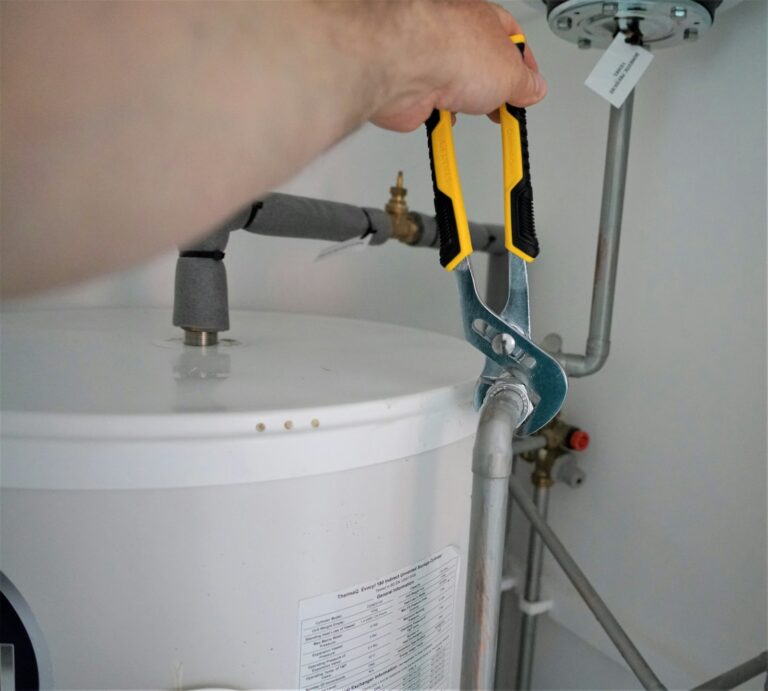
Repair it if the heater is under about 6 years old and the problem is a part, like a heating element, thermostat, pilot assembly or valve. Replace it if the tank itself is leaking, the hot water is rusty, it's past about 10 years, or the repair costs close to half the price of a new heater.
Start with the age
Age is the single best clue. The U.S. Department of Energy puts the typical life of a tank water heater at about 10 to 15 years. Hard water, heavy use and skipped maintenance can cut that short. Tankless units usually last longer, often 20 years or more with maintenance.
The age is printed on the label on the side of the tank, usually coded into the serial number. Each maker uses its own code, often a letter or number for the year. If you can't read it, search the brand name plus "serial number date," or ask the plumber to check.
| Age of a tank heater | Usually points to |
|---|---|
| Under 6 years | Repair |
| 6 to 10 years | Depends on the problem |
| Over 10 years | Lean toward replacing |
Problems that are usually worth repairing
These parts wear out or fail on their own, and replacing them is a normal repair on a heater that's otherwise sound.
- Pilot light won't stay lit on a gas heater. This is often the thermocouple or flame sensor, a small part.
- No hot water or not enough on an electric heater. Electric tanks have one or two heating elements and thermostats, and one going bad is common.
- Water is too hot or too cold. Often a thermostat setting or a failed thermostat.
- The pressure relief valve drips. The valve may be worn, or pressure in the house may be too high. A plumber should check both, because this valve is a safety device.
- Smelly hot water. A rotten-egg smell from the hot side only can sometimes be fixed by replacing the anode rod.
- Leaks from a fitting or valve, not the tank itself. Pipes, unions and the drain valve can be repaired.
Signs it's time to replace
- Water leaking from the tank body. Once the steel tank itself rusts through, it can't be repaired. Replace it before it lets go.
- Rusty water from the hot side only. If cold water runs clear but hot water is brown, the inside of the tank may be rusting.
- Loud rumbling or popping on an older tank, together with less hot water than before. That's usually heavy sediment, and on an old tank flushing may not fix it.
- Repairs keep stacking up. A second or third repair in a year or two on an older heater is money better put toward a new one.
- You need more hot water than it gives. If the household has grown, a bigger tank or a different type may serve you better.
Water pooling around the base?Shut off the cold water valve on top of the heater and turn off its power or gas. Our emergency guide has the steps.
Compare the costs
A repair that swaps one part, like a heating element, thermostat or valve, usually costs far less than a new heater. A replacement costs more, and larger tanks, tankless units and jobs that need new venting or gas line work add to it.
A common rule of thumb: if the repair costs around half the price of a new heater, and the heater is past the middle of its life, replacing it usually makes more sense. A new heater also comes with a fresh warranty.
Ask for both pricesWhen a plumber recommends a repair on an older heater, ask what a replacement would cost too. Seeing both side by side makes the choice much easier.
What can change the price of a replacement
- Size. Most homes use a 40 or 50 gallon tank. Going bigger costs more.
- Gas or electric. Switching fuel types means new gas lines or new electrical work.
- Venting. Some gas models need new venting.
- Code updates. An older install may need updated parts, like a drain pan, expansion tank or relief valve discharge pipe.
- Location. A heater in a tight closet, an attic or a crawl space takes more labor than one in a garage.
- Permit and haul-away. Ask whether the price includes the permit, if one is needed, and removing the old heater.
Thinking about a different type?
Replacing an old tank is a good time to ask whether a tankless or heat pump water heater would suit your home. They cost more up front but can cost less to run. Our tank vs tankless guide compares them for Alabama homes.
Make the next one last longer
Flushing a tank once a year clears sediment, and checking the anode rod every few years can catch corrosion before it eats the tank. Ask the plumber who installs your new heater to show you the drain valve and the shutoff.
No hot water?Water heater repair in Tuscaloosa→Questions people ask
How long does a water heater last?
A standard tank usually lasts about 10 to 15 years, according to the U.S. Department of Energy, and sooner with hard water or no maintenance. Tankless heaters often last 20 years or more with regular maintenance.
Can a leaking water heater tank be repaired?
Not if the leak is from the tank itself. Leaks from valves, fittings or the pipes connected to it can usually be fixed.
Why is my water heater making popping noises?
Usually sediment built up at the bottom of the tank. Flushing can help on a younger heater. On an older one, it can be a sign the tank is near the end.
How do I find out how old my water heater is?
Look at the label on the side of the tank. The date is usually coded in the serial number, and each brand uses its own code.
Should I replace my water heater before it fails?
If it's past about 10 to 12 years old, planning a replacement lets you choose the model and price on your schedule instead of in an emergency.
This guide is general information for homeowners, not professional advice for your specific home. Plumbing Tuscaloosa is a referral service and does not do plumbing work; a licensed plumber should look at your situation before any repair.