
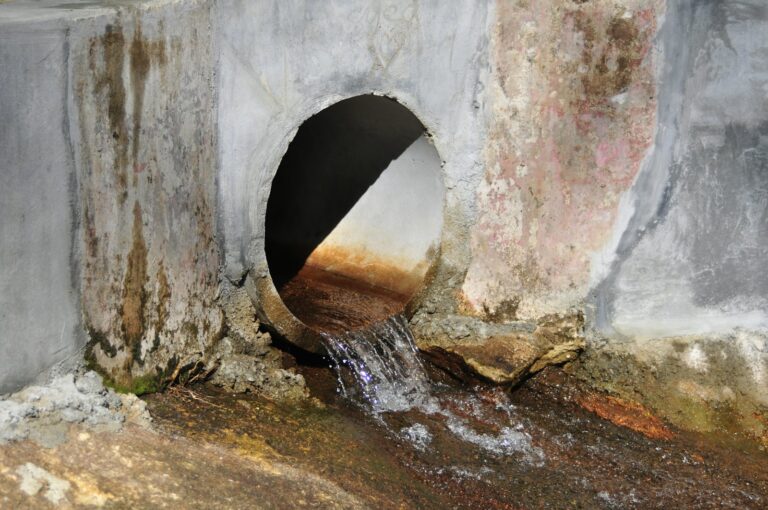
Watch for several drains slowing at once, water coming up in the tub when you flush, gurgling toilets, sewage smells and soggy spots in the yard. In older Tuscaloosa homes the usual causes are tree roots in clay pipe and aging cast iron. A sewer camera inspection shows exactly what's wrong before anyone digs.
The warning signs
A single slow drain is usually a clog in that drain. Trouble in the main sewer line looks different, because every drain in the house empties into it.
- Several drains slow at once, especially on the lowest floor.
- Water comes up in the tub or shower when you flush a toilet or run the washing machine.
- Gurgling from toilets or drains when other fixtures are used.
- A sewage smell inside, near floor drains, or outside in the yard.
- Wet, soggy patches in the yard along the line, or grass that's greener and thicker in one strip.
- The same clog keeps coming back every few weeks or months, even after it's been cleared.
- Sewage backs up from a floor drain or the lowest drain in the house.
Backup happening now?Stop using water everywhere in the house until it's cleared. Our emergency guide covers what to do first.
What causes it in Tuscaloosa homes
Older homes here often have sewer lines made of clay or cast iron. Both last a long time, but both fail in predictable ways.
- Tree roots. Roots find the small gaps at the joints in clay pipe and grow inside, catching paper and grease until the line blocks. Large trees near the line make this more likely.
- Cracked or scaled cast iron. Cast iron rusts and builds up scale inside over decades, narrowing the pipe until it catches everything.
- Sagging sections. Part of a line can settle and form a low spot, called a belly, where waste collects.
- Grease and wipes. Cooking grease hardens in the line. "Flushable" wipes don't break down the way toilet paper does.
- Heavy rain. Storms can push water into an already struggling system and make backups show up all at once.
Is it your line or the city's?
The sewer line from your house to the city main is generally the property owner's to maintain. If your home is inside Tuscaloosa city limits and you aren't sure where the problem is, call the city's Wastewater line at 205-248-5900 to have them check the city's side. If you're outside the city, call your sewer provider, or if you have a septic system, a septic company.
Tuscaloosa numbersSewer backup or sewage on the ground: Wastewater, 205-248-5900. Not sure if you're on city sewer: Office of the City Engineer, 205-248-5380.
Check the cleanout
Many homes have a sewer cleanout, a capped pipe sticking up from the ground outside, often near the foundation or toward the street. If you can carefully remove the cap and it's full of water, the blockage is further down the line. If it's empty, the blockage is between the cleanout and the house. Either way, tell the plumber what you saw. Open it slowly, and don't if water is already pushing out.
How a plumber finds the problem
The plumber will usually clear the line first to get things flowing. If the problem keeps coming back, the next step is a sewer camera inspection. A small camera goes down the line and shows exactly what's there, whether it's roots, a crack, a collapse or a belly, and how far from the house it is. It's the best way to avoid paying for a repair you don't need.
Repair options
- CleaningA cable machine, often called snaking, cuts through clogs and roots. Hydro jetting uses high-pressure water to scour the inside of the pipe. Good for buildup, but roots grow back.
- Spot repairIf the damage is in one place, the plumber can dig at that spot and replace a short section.
- Pipe liningA resin-coated liner is put inside the old pipe and cured in place, forming a new pipe inside the old one. Not every line qualifies.
- Pipe burstingA new pipe is pulled through the path of the old one, breaking it apart as it goes. It needs much less digging than a full replacement.
- Full replacementDigging a trench and replacing the line. More disruption, but sometimes the only option for a collapsed or badly sagging line.
Ask the plumber to show you the camera footage and explain why they're recommending one option over another. Sewer work can run into the thousands of dollars, so for anything beyond cleaning, a second opinion is reasonable.
How to keep the line clear
- Put cooking grease in the trash, not the sink.
- Flush only toilet paper, even if the package says "flushable."
- Know where your line runs before planting trees.
- If roots are a known problem, ask about regular cleaning to stay ahead of them.
Questions people ask
How do I know if it's a clog or the main sewer line?
A clog usually affects one drain. If several drains are slow or water backs up into a tub or floor drain when you flush, the problem is more likely in the main line.
Who is responsible for the sewer line?
The line from your house to the city main is generally the property owner's to maintain. Inside Tuscaloosa city limits, call Wastewater at 205-248-5900 to have the city check its side.
What is a sewer camera inspection?
A plumber runs a small waterproof camera down the line to see roots, cracks, sags or collapses, and how far from the house they are. It helps you avoid paying for the wrong repair.
Do roots in a sewer line come back?
Yes. Cleaning cuts them out, but they usually grow back through the same joints. Lining or replacing the damaged section is the longer-term fix.
Can I use chemical drain cleaner on a sewer line?
It's not recommended. It rarely clears a main line blockage and can damage older pipes or make the work dangerous for the plumber.
This guide is general information for homeowners, not professional advice for your specific home. Plumbing Tuscaloosa is a referral service and does not do plumbing work; a licensed plumber should look at your situation before any repair.